- Home
- Government
- Divisions
- Energy and Environment
- Department of Stormwater
- Protect Our Watershed
Protect Our Watershed
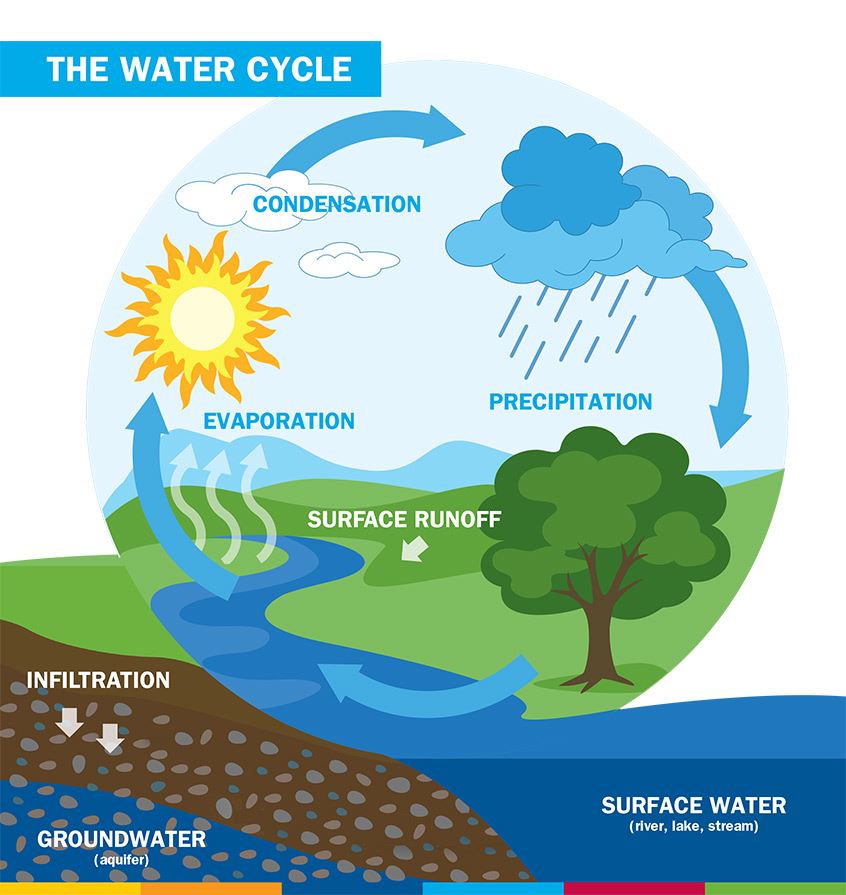 Water is a Finite Resource
Although the Earth has a large amount of water, only a small percentage of it is freshwater readily available for human use. All of the water we use for drinking, bathing, recreation, agriculture, and industry moves through the water cycle- but human activities can result in pollution and disruption of this natural process.
Water is a Shared Resource
All life on Earth is connected to and dependent on the water cycle. Actions we take at home and at work affect those who live downstream, as well as the plants and animals that need a healthy environment. The health of our local waterways depends on us being good stewards of this resource. Currently, the Chesapeake Bay ecosystem's health report card is a graded at C. So, what can we do to improve and protect our watershed?
A bioswale is a landscaping feature that facilitates the slowing, collecting, and filtering of stormwater in a depressed, concentrated area. They are designed to manage a large quantities of stormwater runoff from impervious surfaces, like a parking lot or street. They are generally linear systems that are greater in length than width, and are vegetated with plants that can withstand both heavy watering and drought.
Benefits of a bioswale:
- - Reduces standing water that attracts mosquitoes
- - Allows pollutants to be filtered out of the stormwater
- - Increases aesthetics by providing green space